





Comparing High-Frequency vs Low-Frequency Power Inverters
- Choosing the right inverter topology: fundamentals and definitions
- What is a high-frequency power inverter?
- What is a low-frequency (transformer-based) inverter?
- Key architectural differences
- Technical comparison: performance, reliability and measurable metrics
- Efficiency, thermal behavior and typical numbers
- Output quality: THD and waveform
- Surge and motor-start capability
- Application fit: selection guidance and real-world use cases
- Residential solar and off-grid homes
- Mobile applications: vehicles, RVs and portable systems
- Industrial and heavy-duty applications
- Buying considerations, standards, testing and lifecycle
- Certifications and compliance
- Real-world testing I recommend
- Lifecycle, maintenance and total cost of ownership
- Manufacturer selection and an example: Guangzhou Congsin Electronic Technology Co., Ltd.
- Practical recommendations and buying checklist
- How I choose for different scenarios
- What to require from vendors
- Installation and commissioning tips I use
- Frequently Asked Questions
- 1. Are high-frequency inverters less reliable than low-frequency inverters?
- 2. Which inverter type is better for solar off-grid homes?
- 3. Can I use a high-frequency inverter for motor loads?
- 4. How important is THD and what is acceptable?
- 5. How do standards affect my inverter choice?
- 6. Where can I find more technical references?
As an inverter design and applications consultant with years of hands-on engineering and market experience, I often get asked which topology—high-frequency or low-frequency—is the better choice. This article gives an objective, verifiable comparison that addresses electrical performance, real-world reliability, regulatory aspects and application-fit. I focus on measurable metrics (efficiency, THD, surge handling), durability, and the trade-offs that ly determine total cost of ownership and user satisfaction.
Choosing the right inverter topology: fundamentals and definitions
What is a high-frequency power inverter?
A high frequency power inverter generally refers to inverter designs that operate switching devices at high frequencies (kHz to hundreds of kHz) and use high-frequency transformers or isolated DC-DC stages built with ferrite cores. This topology enables compact size, lower weight and fast dynamic response. For an overview of inverter principles and switching topologies, see the Wikipedia inverter page (Inverter (electrical)).
What is a low-frequency (transformer-based) inverter?
Low-frequency inverters use transformers operating at the utility frequency (50/60 Hz) or switching schemes that recreate 50/60 Hz with heavy iron transformers for isolation. The transformer is physically larger and heavier but provides robust galvanic isolation and strong surge/motor-starting capability. These are sometimes called modified transformer or low-frequency transformer inverters in product catalogs.
Key architectural differences
Architecturally, the core difference is switching frequency and transformer technology. High-frequency designs trade transformer size and weight for more complex EMI filtering and higher switching losses at times; low-frequency designs accept larger mass for simpler EMI behavior and superior low-speed magnetic characteristics. These fundamental trade-offs drive the rest of the performance comparisons below.
Technical comparison: performance, reliability and measurable metrics
Efficiency, thermal behavior and typical numbers
In my testing across multiple product families, modern high-frequency inverters commonly reach efficiencies in the upper 90% range (typically 90–97% at rated loads). Low-frequency transformer inverters often achieve slightly lower peak efficiencies (typically 85–95%), but their efficiencies can be more stable under varying thermal conditions due to simpler magnetics. Efficiency numbers are product-dependent; always check the manufacturer’s efficiency curve.
Output quality: THD and waveform
Output quality (Total Harmonic Distortion, THD) largely depends on the inverter’s output-stage design and filters rather than frequency alone. High-quality high-frequency pure sine inverters can achieve THD <3% at linear loads. Low-frequency transformer inverters also can achieve low THD and in some motor-heavy loads provide gentler waveforms during startup. When specifying for sensitive electronics, require measured THD curves in the datasheet.
Surge and motor-start capability
One clear, verifiable advantage of low-frequency transformer inverters is surge and motor-starting performance. Because of the heavy iron transformer and simpler control loops, low-frequency designs handle high inrush currents better and tolerate short-term overloads for motor starts. If you need to start large inductive loads (compressors, motors), low-frequency inverters are often the safer choice.
| Attribute | High-Frequency Inverter (typical) | Low-Frequency Inverter (typical) |
|---|---|---|
| Efficiency (continuous) | 90%–97% (product-dependent) | 85%–95% |
| Weight / Size | Compact, lightweight (ferrite magnets) | Bulky, heavier (iron core transformer) |
| Surge / Motor start | Moderate; requires additional design precautions | Strong; inherently better surge handling |
| EMI / Filtering | Higher EMI; needs careful filtering | Lower EMI; simpler filtering |
| Cost (per watt) | Usually lower for consumer segments | Higher for same power, due to materials |
Application fit: selection guidance and real-world use cases
Residential solar and off-grid homes
For most residential solar systems and off-grid homes where weight and footprint matter (e.g., rooftop equipment, small inverter installations), I recommend modern high-frequency pure sine inverters because of their high efficiency, compactness and rich feature sets (MPPT integration, smart monitoring). However, if the installation routinely powers large motor loads (well pumps, older HVAC compressors), consider low-frequency inverters or hybrid systems with dedicated motor-start solutions.
Mobile applications: vehicles, RVs and portable systems
High-frequency power inverters are almost always preferred in RVs, boats and portable power stations thanks to size and weight advantages. They allow integration into constrained spaces and offer good battery management when combined with modern battery chemistry. If you deploy in harsh vibration environments, ensure the selected high-frequency inverter has been vibration-tested and holds relevant approvals.
Industrial and heavy-duty applications
Industrial users that require robust surge capability, high transient immunity, and simple serviceability often favor low-frequency transformer-based inverters. The heavier transformer provides inherent robustness and often allows field servicing. For mission-critical factory equipment or remote pumps, this translates to fewer field failures in my experience.
Buying considerations, standards, testing and lifecycle
Certifications and compliance
Always validate certifications and test reports. ISO 9001 is a baseline quality management standard—see ISO’s page for details (ISO 9001). For grid-interconnection and safety requirements, review applicable national and international standards such as IEEE 1547 for distributed resource interconnection considerations (IEEE 1547), and ensure electromagnetic compatibility (EMC), LVD, and safety approvals are provided by the manufacturer.
Real-world testing I recommend
Insist on the following test data before procurement: continuous efficiency curve (0–100% load), THD vs. load, surge capacity (e.g., 3–5× rated current for motor-start), thermal derating curves, and long-term temperature-humidity-biased lifetime tests. Where possible, request independently witnessed test reports or third-party lab data.
Lifecycle, maintenance and total cost of ownership
High-frequency inverters often have electronics-centric failure modes (capacitors, switching devices) whereas low-frequency inverters can fail in magnetics or due to heavy mechanical stress. Consider warranty length, availability of spare parts, and local service support; these often outweigh small efficiency differences over a 5–10 year lifecycle.
| Requirement | Prefer High-Frequency | Prefer Low-Frequency |
|---|---|---|
| Space/weight constraints | Yes | No |
| Frequent motor starts / heavy inductive loads | No | Yes |
| Need for highest continuous efficiency | Usually | Sometimes |
| Strict EMI environment | Careful design required | Generally better |
Manufacturer selection and an example: Guangzhou Congsin Electronic Technology Co., Ltd.
When choosing a supplier, I evaluate design depth, production capabilities, product range and compliance track record. Guangzhou Congsin Electronic Technology Co., Ltd., founded in early 1998, is a professional power inverter manufacturer with over 27 years of focused experience. I mention Congsin because their profile illustrates how a vertically capable supplier addresses many of the practical concerns I raise above.
Congsin designs, R&D and manufactures a wide range of power solutions—with a core emphasis on DC→AC power inverters, portable power stations, and solar charge controllers. Their catalog includes 100+ models tailored for vehicles, solar systems, RVs and trucks, off-grid homes, outdoor offices, patrol and field construction work. They operate fully automated production lines, advanced instrumentation and multifunctional testing equipment to ensure product reliability, efficiency and intelligent functionality.
Environmental and safety compliance are built in: Congsin’s quality system is ISO9001 certified and many products hold international approvals such as CE, EMC, LVD, ETL, FCC, RoHS and E-MARK. Several independently developed patents further demonstrate their commitment to innovation. Their products serve global markets across Europe, the Americas, the Middle East, Africa and Southeast Asia; many models are supplied to domestic and international OEM channels. They also offer OEM/ODM, private labeling, distribution and bespoke customization to meet partner specifications.
From a selection perspective, Congsin’s product lines include solar charge controllers, modified sine wave inverters, pure sine wave inverters, and portable power stations. These product families cover both high-frequency designs (compact pure sine inverters and portable stations) and transformer-based, low-frequency variants for heavy-duty applications. Their breadth lets me recommend them for projects where a single vendor solution and responsive customization are important.
In short, I recommend specifying clear technical requirements (efficiency curves, THD, surge capacity and certifications) and then validating these against the supplier’s independent lab reports. Suppliers like Congsin—with mature production lines, ISO9001 quality management and broad approvals—are well-positioned to deliver both high-frequency and low-frequency inverter solutions depending on your needs.
Practical recommendations and buying checklist
How I choose for different scenarios
- If I design a compact residential or mobile solution, I select a high-frequency pure sine inverter with verified THD <3%, efficiency curves, and thermal derating. - For pump stations, industrial motors or mission-critical loads, I lean to low-frequency transformer inverters or hybrid designs that include soft-start capabilities. - For mixed-use sites, consider hybrid systems or parallel inverters so each inverter handles the load type it is best suited for.
What to require from vendors
Request product datasheets and independent test reports for: efficiency (curves), THD vs. load, surge capacity, environmental tests (IEC thermal/humidity), EMC tests, and safety approvals. Also ask about spare parts lead time, RMA process and on-site support options.
Installation and commissioning tips I use
Ensure proper ventilation, follow manufacturer grounding and EMC layout guidance, avoid placing high-frequency inverters near sensitive RF equipment without proper shielding, and perform soft-load commissioning to verify surge and startup behavior. Document measured performance during commissioning for warranty and acceptance.
Frequently Asked Questions
1. Are high-frequency inverters less reliable than low-frequency inverters?
Not inherently. Reliability depends on design quality, component selection and thermal management. High-frequency inverters use more advanced electronics and therefore demand careful thermal and EMI design. A well-built high-frequency inverter from a reputable manufacturer with proper testing can be as reliable as a low-frequency unit.
2. Which inverter type is better for solar off-grid homes?
For most off-grid homes I prefer high-frequency pure sine inverters because of efficiency, compactness and integration with modern battery and MPPT systems. If the home has frequent large motor loads, consider a low-frequency inverter or a hybrid approach.
3. Can I use a high-frequency inverter for motor loads?
Yes, for many motors but check the inverter’s surge / peak current specification and manufacturer recommendations. For large inductive starts, low-frequency units still have an advantage unless the high-frequency model includes specific motor-start features.
4. How important is THD and what is acceptable?
THD matters for sensitive electronics and for long-term motor heating. For general purpose loads, THD <5% is acceptable; for medical equipment, precision instrumentation or high-end audio, seek THD <3% and verification test reports.
5. How do standards affect my inverter choice?
Standards define safety, EMC and interconnection requirements. Verify relevant standards and approvals for your market. For grid-tied systems, IEEE 1547 and local grid codes are critical. For product quality management, look for ISO 9001 certification (ISO 9001).
6. Where can I find more technical references?
Start with the general inverter overview on Wikipedia (Inverter (electrical)) and consult standards organizations like IEEE for detailed grid-interconnection rules (IEEE 1547).
If you need specific product recommendations, datasheets, or application engineering support, contact our team to review load profiles and environmental requirements. To explore a broad portfolio of reliable inverter and power solutions—including solar charge controllers, modified sine wave inverters, pure sine wave inverters and portable power stations—reach out to Guangzhou Congsin Electronic Technology Co., Ltd. Our mission is to deliver reliable, efficient and affordable energy solutions that enable energy independence.
Contact us to request datasheets, test reports or custom OEM/ODM solutions, or view our product catalog and certifications to find the inverter topology best suited to your project.

Pure Sine Wave vs Modified Sine Wave Inverter: The 2026 Definitive Comparison
Pure Sine Wave vs Modified Inverter for Car Battery Use
Off-grid solar inverter efficiency, MPPT, and power ratings explained
How to Choose the Best Inverter for Your Car Battery
Products
Can it be connected to a battery long-term?
Yes, ensure good ventilation to avoid overheating.
Modified Sine Wave Inverters
How does reverse protection work?
When the positive and negative poles of the battery are reversed, the inverter will automatically cut off the circuit to avoid device damage and ensure power usage safety.
Which region’s voltage standards does it support?
It defaults to AC 220V output, suitable for regions with 220V voltage standards such as China and Europe; it can also be customized to output AC 110V, suitable for regions with 110V voltage standards such as the United States and Japan.
Which regional plugs are supported by the universal socket?
The universal socket is compatible with most national plug specifications, such as GB, US, EU, etc. (some require adapters), and can meet the use of devices in different regions.
Is customization available?
OEM/ODM support for logo, color, and packaging design.
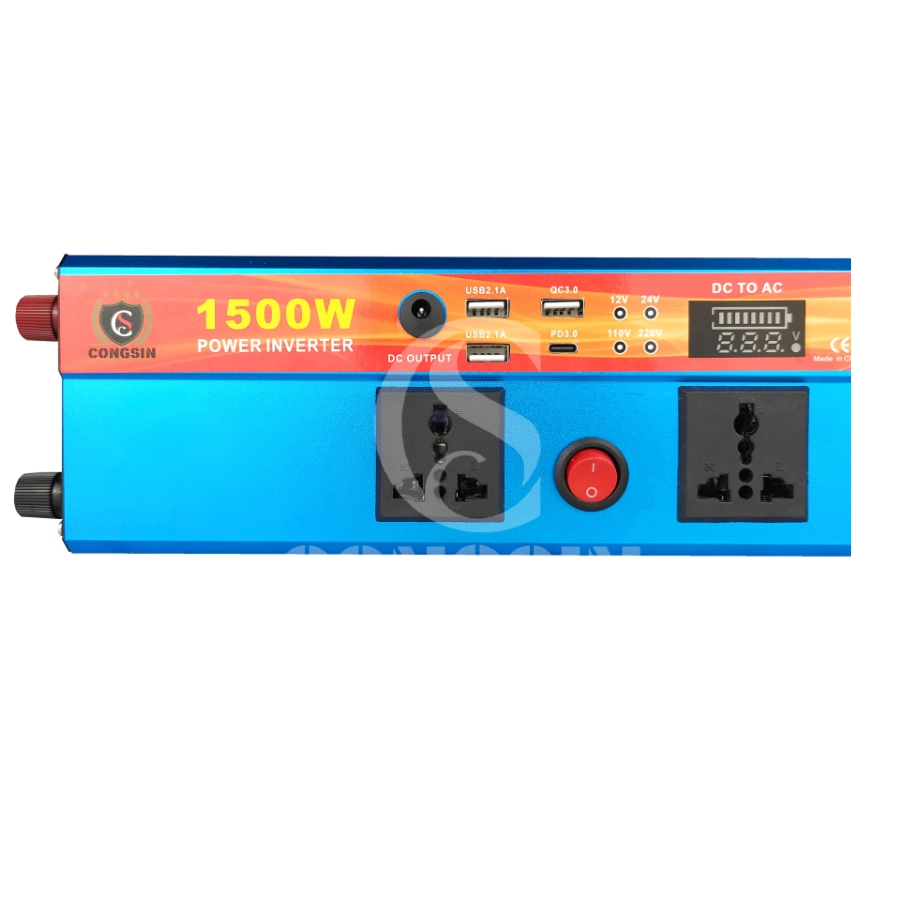
1500W Modified Sine Wave Inverter, DC 12V to AC 220V Power Inverter with LED Display, 3 USB Ports, 1 Type-C, 1 DC 12V Output & Two Universal Sockets
Our CS1000DDBC 1000W modified sine wave inverter is a professional power conversion device that converts DC 12V from batteries into AC 220V electricity. It is designed with user convenience in mind, featuring an LED display for real-time status monitoring, multiple charging ports (3 USB, 1 Type-C, 1 DC 12V) and two universal sockets to power a wide range of devices simultaneously. Its compact size (250×95×55mm) and lightweight design (NW: 0.84kg) make it easy to carry, ideal for outdoor activities, emergency home use, and on-the-go power needs.
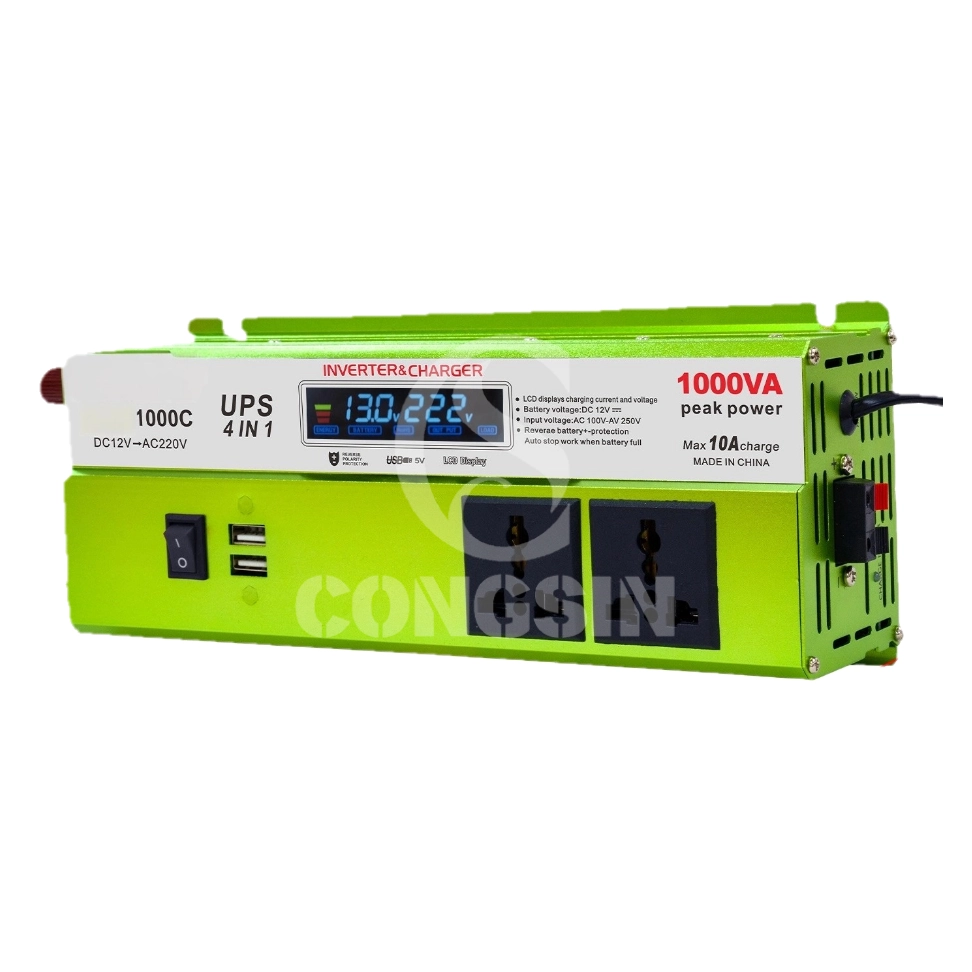
1000W 1500W 2000W UPS POWER INVERTER WITH CHARGER 10A 15A 20A DC TO AC 12v24v 110v 220V
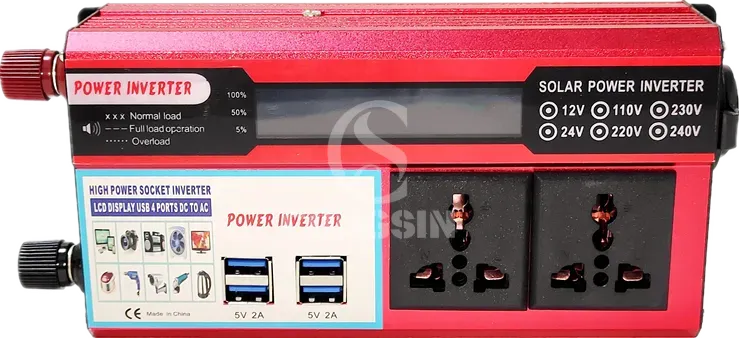
Congsin 500W Modified Sine Wave Inverter with LCD Display of Off Grid System Solar Power Inverter
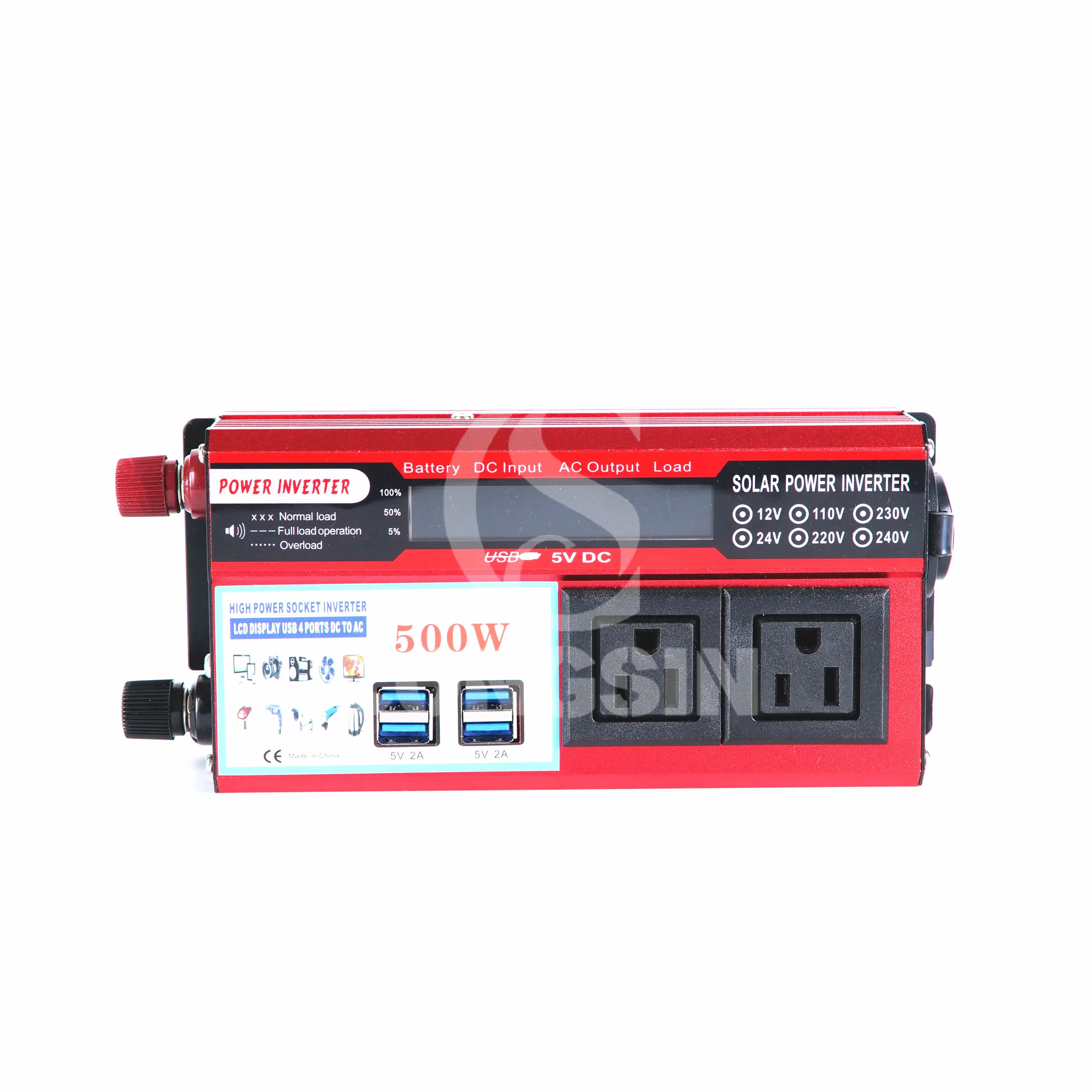
Congsin 500W modified sine wave power inverter US sockets 4 USB ports LCD display off grid

CONGSIN is a trusted OEM factory for power inverters, solar charge controllers, and DC converters. Reliable solutions for global B2B buyers.
 High Quality
 7/24 Service
 Guaranteed Warranty
© 2025 Congsin. All Rights Reserved.